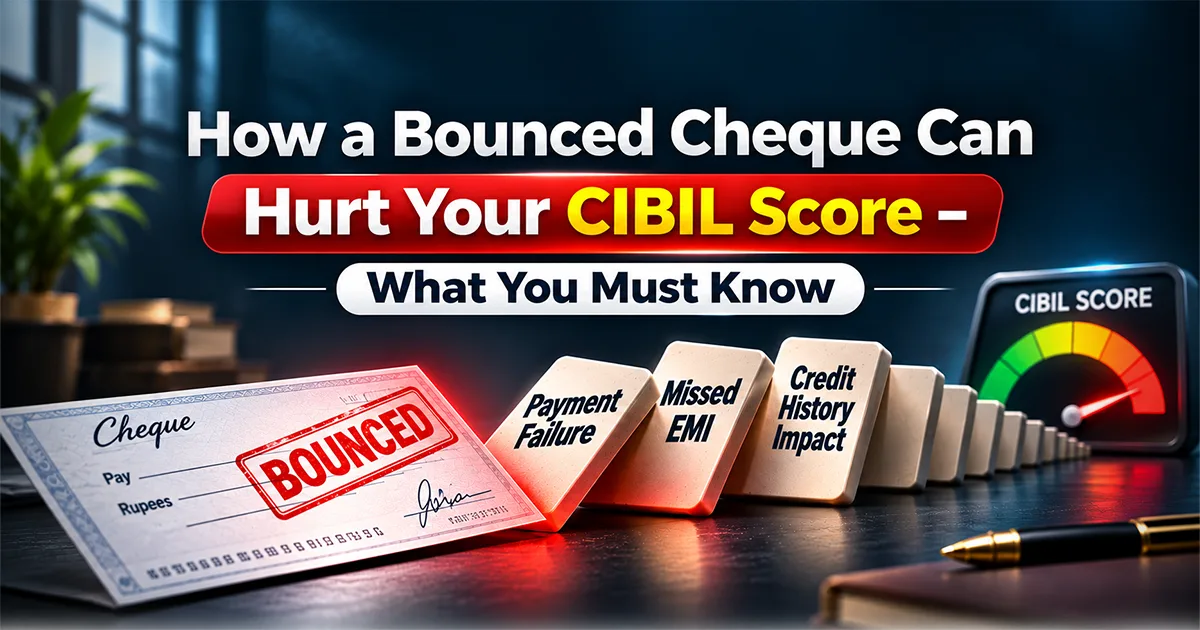

This article provides a breakdown of how a bounced cheque can harm your CIBIL score and your creditworthiness. A cheque will bounce if there are insufficient funds or if an error occurs on the cheque. If the cheque is related to a loan or credit card repayment and it bounces, the bureaus could report it as a late payment or missed payment. Your CIBIL score would decrease, making it more difficult to get loans or credit in the future. This does not last forever, but can show up on your report for a matter of months or even years. The best way to prevent this from occurring is to keep your balance high enough, follow up on cheques that you have issued, and try to conduct as many payments as possible digitally. If a cheque does bounce, pay your dues on the bounced cheque quickly, and keep a pulse on your credit report so that your score continues to go up over time.
A bounced check may appear to be a minor problem for you; however, it can have significant implications for your financial life. When a check bounces because of insufficient funds, incorrect information, or a closed account, it causes missed payments and resulting penalties. More importantly, a bounced check can adversely affect your CIBIL score, which is a crucial indicator of creditworthiness. This score is a number banks and lenders use to assess your eligibility to borrow money using a loan or credit card. Even one bounced check against a loan or credit-card application will drag down your score and make it tougher to borrow in the future. So, knowing how a bounced cheque affects your CIBIL score, is there any way to avoid it or get through one?
There is more than simply the inconvenience of having to do business with banks and creditors, to which a bounced cheque can be detrimental. Among others, one of the most important impacts is the impact that it may have on your CIBIL score. A bounced cheque can lower your CIBIL score, which is a crucial score in your life. This has the potential of damaging your future borrowing or credit authority. The impact of a bounced cheque on your credit score is a major issue that you need to learn to balance and maintain a good financial appearance.
A bounced cheque happens when the funds in the account are not enough to clear the cheque amount or when the cheque is not clear because of a detachment of details or a closed account, among other causes. When the cheque bounces, the recipient (the individual or company to whom the money is due) does not receive the money as he/she was supposed to receive. This translates to an inability to meet or pay the bills on time, which may be followed by the imposition of penalties, interest, and the effect on your credit rating.
Bouncing cheques not only impact your relationship with the payee, but they also impact your credit profile. The banks, lenders and financial institutions use the CIBIL score, which is kept by a credit referencing agency (Credit Information Bureau (India) Limited (CIBIL) to determine whether or not you are worthy of their credit. Bounced cheques may also impact a loan repayment or a credit card payment, which is why it might cause a poorer CIBIL score.
Your credit history is an extensive report of how you have behaved in terms of borrowing and repaying loans, credit cards and other financial products. Should the delays in payments or defaults in your obligations be a result of a bounced cheque, this may be reflected in your credit record as adverse. On the other hand, a bad credit score has a direct impact on your CIBIL score.
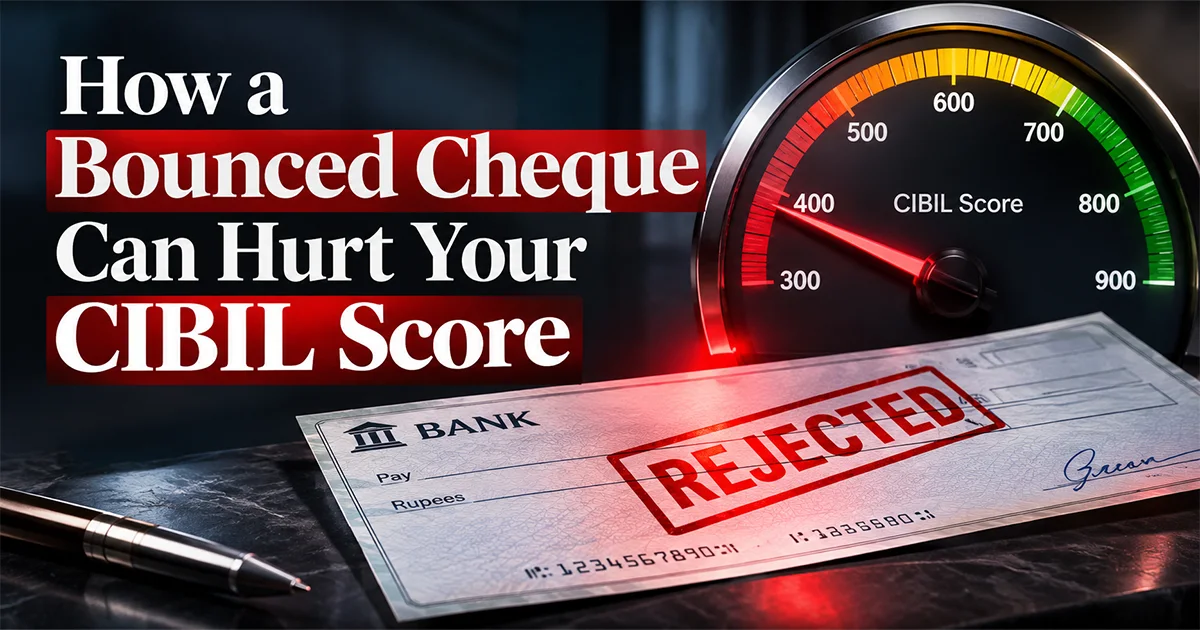
The normal ranges of CIBIL score are 300 to 900, with a score higher than 750 described as an excellent score. In case you miss payments or your cheque is bounced and not corrected, your score can go down to below 700, and you can be considered a risky borrower by the lenders. This complicates the task of obtaining loans or credit later in future on favourable terms.
In case of a cheque bouncing, the bank usually forwards a report to CIBIL on the same. This report could contain information on any unpaid payments, such as overdue loan or credit card payments. When you miss the payments leading to a default or long delay, it does not augur well with your creditworthiness.
Late payment: If your loan or credit card default is due to a bounced cheque, a delayed payment may reflect on your CIBIL score.
More defaults: If the bounced cheque results in more defaults, such as late fees or higher interest charges, your CIBIL score will reduce further.
Fines: Bank fees: When your ATMs bounce, you'll be fined at the discretion of the bank, and this will affect how you are treated for credit with others in future.
The hurt to your CIBIL rating as a result of a bad cheque does not last eternally; however, the results may be long-lasting. It hinges on the success of solving the problem in a faster manner, the defaulting payment in your payments promoted by the bounced cheque, and whether the penalty is present or not.
The effect on credit score might not be serious as long as the problem is corrected in time through paying the bounced funds and preventing additional delays. But then again, when you continue bouncing cheques regularly or do not even clear the outstanding dues, the effect may take several months or years.
Where a bounced cheque impacts loan repayment, it may stay in the credit history as long as seven years, depending on the magnitude of missed payments and the length of default.
One of the first things that prospective lenders want to know about you is your CIBIL score when they decide on whether to approve a loan or provide credit. A high score means that you are a good borrower, and a low score is an indication that you may be having difficulty repaying debts. Some bounced cheques may lower your CIBIL score, so you may have a harder time getting a loan, mortgage, or credit card in the future.
Additionally, a lower credit score can lead to:
Higher interest rates on loans
Lower credit limits on credit cards
Rejected loan applications
By keeping the CIBIL score high, it is guaranteed that you get good terms for taking credit. Bouncing cheques should be avoided at any cost, and by doing so, your finances will go a long way in maintaining your creditworthiness.
Ensure Sufficient Funds: Never write a cheque before you are certain that your account has adequate funds to cover the amount on the cheque. In case of any doubt, balance it or do online banking to verify your available amount of money.
Keep Track of Cheques Issued: Keep a record of all the cheques issued and make sure that you have sufficient funds to meet all the cheques. Most people can forget about excellence checks, and this may result in default mistakes.
Opt for Digital Payments: You can use electronic transfers or NEFT/RTGS payments. These are faster payment methods, which are easier to trace and have a lower chance of bouncing.
Immediate Resolution: Once a cheque bounces, address the matter within the shortest time possible. Keep the interest and other fines to avoid delays and default, which may damage your credit report.
Negotiate with the Payee: In case a bounced cheque is involved in a particular payment, contact the payee (e.g. a lender or a vendor) and make an attempt to negotiate an extension or alternative means of payment.
One bad cheque can really affect your CIBIL score, which is a crucial indicator of your creditworthiness. What most people do not realise is that even such a minor financial misstep could just taper off into repercussions in the long run, in their effort to take loans or credit cards. It is crucial to know how a bounced cheque can damage your credit score to ensure that your financial future is not ruined. This paper covers the implications of a bounced cheque on your credit score, its ability to derail your CIBIL report and what you can do to both avoid its influence as well as recover in case of a bounced cheque.
A bounced cheque is when you do not have enough funds in your account to cover the value of the cheque, or due to a problem with the cheque, like incorrect information. Although this could be a simple inconvenience, the impact can far surpass only a transaction. Bouncing a cheque, besides ruining your relationship with the receiver, can also destroy your CIBIL score badly.
A CIBIL score is a number that is used by banks and other financial institutions in determining your creditworthiness. It is between 300 and 900, whereby a high score represents good credit behaviour. Although the bounced cheque may have no direct connection to either a loan or a credit card, it can still have an impact on your credit report in the ways mentioned below:
In case the cheque that was bounced was issued to pay a loan or credit card monthly, the non-payment will be recorded as a missed payment. Even short-seasonal postponements of payments can drop your CIBIL score, particularly when the situation recurs. In the long term, when the problem is not addressed in a short time, it may become a default, and it has a much greater and permanent effect on your credit rating.
The credit history is a documentation of your pattern of borrowing and repaying, and it is a major determinant of your CIBIL score. When a bad cheque leads to outstanding payments or a prolonged delay in payments, then this unfavourable occurrence is captured in your credit report. The more the defaults or outstanding payments, the poorer your credit history will be, and thus, your CIBIL score will be very low.
The implications of a bounced cheque to your CIBIL are not eternal; however, the impacts may take months or even last longer, depending on how they are dealt with. In case you take prompt action to rectify the bounced cheque and clear any pending dues, it will do you little harm in terms of your credit score. Nevertheless, when you do not fix the problem or keep on defaulting, that will be reflected in your credit report for a long time.
In most instances, negative credit remarks like a bounced cheque may stay on your credit record for up to seven years, although the weakening influence on your CIBIL score will alter gradually as long as you change to positive financial habits in the future.
The most effective solution to a bounced cheque is to ensure that it does not occur at all. These are just a few useful measures that you can put in place to make sure that you insulate your CIBIL score against any negative influence.
It is one of the simplest methods to prevent a bounced cheque by making sure that you have enough money in your bank account, and therefore any cheques issued are confirmed. This means taking care of your account balance and monitoring it on a regular basis. To prevent disappointments, always check again to determine how much money you have before writing a cheque.
Keeping a record of all the cheques released and keeping sufficient money to pay each cheque is another proactive move. This will ensure that you keep up with your financial requirements and avoid any unintentional lapses that might cause a bounced cheque. You can also make some reminders on the next payment date, so you will have time to make sure that your account balance is tidy.
In the modern digital era, one has numerous alternative methods of payment, which are quicker and safer in addition to being less error-prone. Online bank transfer, mobile wallets, and NEFT/RTGS are quicker than the process of issuing a cheque and can also be tracked in real-time when making a digital payment. Replacing payment options with these will be a great way to minimise the chances of a bounced cheque as well as its effects on your credit rating.
In case the bounced cheque already had some repercussions on your CIBIL score, which is already damaged, have no worries! There are still measures you can take to salvage the situation and reclaim your creditworthiness in the long run. A bounced cheque can be recovered, yet this should be done immediately and by carefully following up.
The initial action in salvaging a bounced cheque is to settle the overdue amount. Get in touch with the payee and clear the issue by giving him a fresh cheque or by making him a payment in some other way as soon as possible. Clear the outstanding balance early enough so that the issue does not accumulate to a prolonged default, which will not augur well on your credit report.
After making a payment, the payee can be asked to notify the bank and credit reporting agency (like CIBIL) about the payment settlement. The payees might also be ready to revise the records and ask to remove the negative marks on your credit report in certain circumstances, particularly in instances of a single-time error.
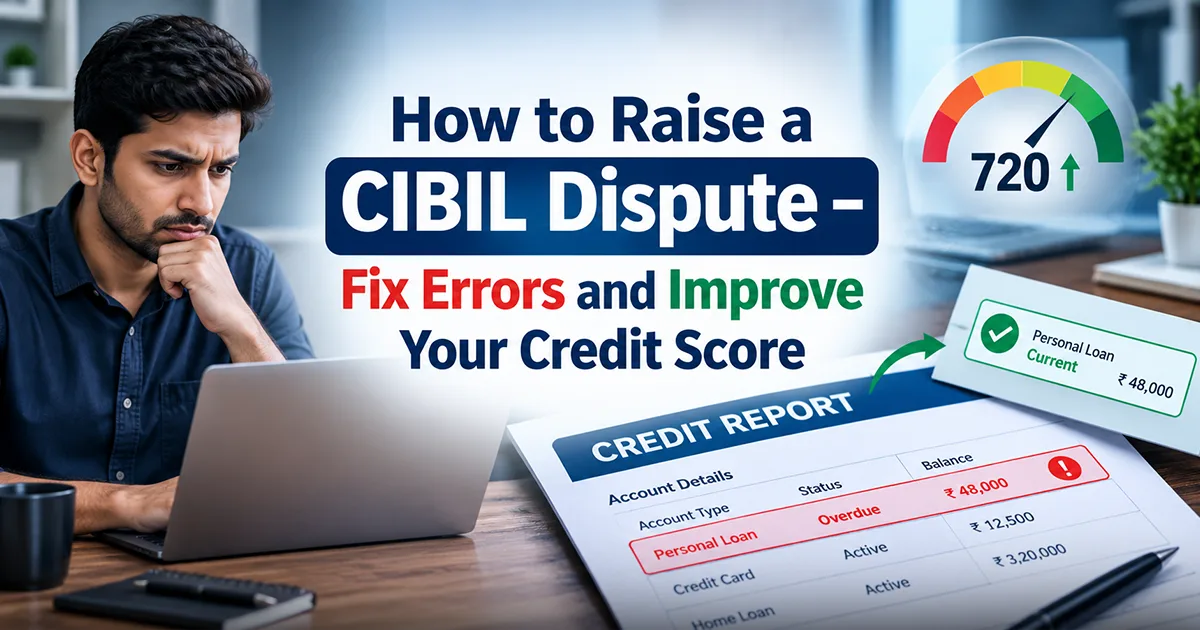
Note that even once you resolve the issue, it’s smart to monitor your credit report. You can apply for a FREE copy of your Credit Report to know if the bounced cheque incident has been updated accurately with CIBIL or any other credit bureau. This will also help you keep track of any inconsistencies or errors that could develop over time and cause a greater negative impact on your CIBIL score (not to mention be an unnecessary headache for days!).
Realise real "Bounce Back" will be on some life shit - Fake it till you make it. All you can do to improve your CIBIL score is start paying off part of the loan or clear credit card outstanding regularly. In time, both of these good aspects will outweigh the bad consequences of the bounced cheque, and your ‘credit score’ will begin to improve.
You might also establish and maintain a plan where you use either a secured credit card or take out a small personal loan to show that you can be trusted with credit. This can also help increase your CIBIL score, provided you pay the dues on time.
When your bounced checks are more than just a lost bank fee, bouncing a check is more than a simple reflection of not having the available funds to cover the payment. Lenders use your credit history when deciding whether to lend you loans and credit cards, so even a single bounced cheque can undermine their confidence in your ability to repay. The best defence, he said, is actually offence: Have enough money in your account, use secure digital payments and pay debts on time. If the cheque has already bounced, immediately pay up while demanding rectification in your credit report and work on building the score back by making timely repayments. By being proactive and responsible, you can minimise losses in the long run, preserve your CIBIL score and take advantage of better credit prospects ahead.
Que: Am I affected by one bounced cheque in my CIBIL report?
Ans: Yes, especially when you are paying for a credit card or a loan. If you do not fix this right away, it could negatively affect your score.
Que: How long does a bounced cheque show on my credit report?
Ans: Positive ‘derogatory’ and if you timely make payments in the future, the effects will dissipate, but it could last up to seven years.
Que: How do I stop a cheque from bouncing?
Ans: Rather than writing a check, you prefer sending an electronic payment using RTGS, UPI, or NEFT, being sure to have enough money available, and keeping track of checks you have written.
Que: Can I bring my score back up after a bounced cheque?
Ans: Yes, by paying your bills on time going forward, getting changes made to your credit report, and paying off debts as soon as possible
Next Post

Founded in 2015, Ahk Tips is a New Delhi-based financial advisor specializing in debt relief and loan management solutions.